Friday, October 8, 2010

Oktoberfest: Potato Soup

Absolutely everyone I know is sick right now. Rest assured: you are in snot-dripping, sneezy agony. Over the last week I've made butternut squash soup, chickenless noodle soup, and, to mix things up from my usual routine, Bavarian Potato Soup. Nothing could be simpler! If you have a slow cooker, it can be a good alternative for making just about any type of soup. Usually, it takes about 8 hours on low or 3-4 hours on high in place of the normal cooking time for soups.

Bavarian Potato Soup

Ingredients
2 onions
3 T olive oil
1 lb potatoes
1 carrot
3 ribs celery
1 small leek
1 clove garlic
6 cups vegetable stock
1/2 t. dried marjoram
1/2 t. dried thyme
1 t. liquid smoke
salt
freshly ground pepper
freshly ground nutmeg
handful of parsley

Directions
1. Peel and dice the onions.
2. Heat the oil on medium and saute the onions until golden, about 10 minutes.
3. Meanwhile, peel the potatoes, carrot, and garlic, and dice these along with the celery. When the onion has cooked, at the remaining vegetables and saute them together briefly.
4. Add the broth and seasonings, mixing in salt, pepper, and nutmeg to taste. Bring the mixture to a boil, reduce heat, and simmer for 20 minutes.
5. Immersion-blend soup and check seasonings. Chop and add the parsley.
6. EAT

Thursday, October 7, 2010

Oktoberfest: Griebenschmalz


In late September and early October, when the weather has just turned cold and it's apple picking season and the cold, light witbiers of summer give way to the heartier fall bocks and Märzens, is there anything more delicious than German food?

There is not.

And once you've picked those eighteen pounds of apples, you need to find something to cook with them. That's where Apfelgriebenschmalz comes in. A simple spread, traditionally made with lard but made deliciously vegan, to put on your toasted rye bread while you drink your favorite fall beer and cheer for Devin Hester.

Apfelgriebenschmalz

Ingredients
3 sticks Earth Balance nonhydrogenated vegan margarine
1 large onion
1 large clove garlic
1 large apple (use something flavorful, tart, and good)
1 T dried marjoram
3 peppercorns
1 bay leaf
1/4 t. liquid smoke
1/4 t. salt

Directions
1. Melt the Earth Balance in a small saucepan on medium heat.
2. Finely dice the onion, mince the garlic, and thinly slice the apple, then chop into smallish matchsticks.
3. Add these to the margarine along with seasonings. Allow the mixture to simmer until the onions are golden, about 15 minutes
.
4. Remove the bay leaf and pour the mixture into ramekins (I had enough to fill 3 8-ounce ones). Refrigerate until the margarine is firm again.
5. Spread the mixture on lightly toasted rye bread and enjoy!

Friday, October 1, 2010

What I Found in my Box (electronics edition)

After seeing the Ithacka box of junk challenge, I was intrigued. Not intrigued enough to order one, but I filed the idea away as Something I Should Do. Naturally, when I was at American Science and Surplus during a trip to the Midwest last week, I couldn't help picking up one of these babies.

And so, I present: the Crazy Inventor's Mystery Box. It's a bit like joining a CSA for old electronics junk. It turns out, flying with one of these in your checked luggage is the TSA equivalent of wearing a kick-me sign:


Once home, I meticulously photographed and documented the contents of my box. I'll post more with any projects made from it, but here are some spoilers:


The logic probe is an accessible place to start, though most of the components in the box are analog. Also included were about 6 small polarizing filters. They look like the kind that come inside small b/w LCD electronics.


60 Watt AC motor, and a bunch of speaker wire. There's at least one other motor in the box. Other items: lots of coax and TV bits, speaker plugs, touch sensors (in Mindstorms parlance, anyway; most of us would say buttons and pedals), a small PCB-mounted LCD, a "privacy" switchplate, a rechargable battery, pneumatic parts, small screwdrivers, angled scissors, and (this is sort of my favorite because of the instant death factor) some chopped off power cords with the plug end included. Time to make projects!

Saturday, June 26, 2010

Cookbooks! "Vegan on the Cheap"

After not seeing much new on the vegan cookbook front since Vegan Brunch, I noticed a flurry of new cookbooks that have dropped recently. Last week I ate mostly out of Robin Robertson's Vegan on the Cheap, and it's a new favorite.

There are a few ways to end up spending a ton of money going vegan. It's easy to fall into a trap of eating microwaved convenience foods all the time, and living off Amy's loaf and Celentano manicotti isn't pleasant or cheap. Or you can buy a bunch of ingredients to make daily recipes out of the Millennium Cookbook, and sometime after making three subrecipes for one entree, give up and head to a restaurant. And then there's loving to cook but realizing you just spent $25 on a tiny bottle of hazelnut oil; plenty of cookbooks are full of expensive gourmet ingredients, obscure produce, or call for fake cheese or meats more expensive than the ingredients they're replacing.

Robertson's cookbook, delightfully, addresses all of these vegans with recipes that are simple, easy, and require only cheap ingredients, with plenty of recipes that can be made solely from pantry ingredients instead of highly perishable produce, making them ideal for that day or two you're trying to stretch out not going to, say, the commissary on a saturday payday before a holiday weekend. If you want to save some money by making your own staples, there are recipes for that, although she doesn't go crazy assuming everyone wants to start canning their own beans. Plenty of recipes have different levels of commitment: if you've found an abundant, seasonal cheap source of tomatoes you can make that homemade sauce, but the amounts required are conveniently equivalent to a jar from the store. If more expensive ingredients aren't a problem she adds a few "splurging" tips for each recipe, usually in the form of more expensive veggies or fake cheese you can throw in.

What did I make? The Tortilla Strata (above), an old school casserole that combined beans, corn, salsa, and tortillas. Since I had some on hand, I used mozz-style Daiya instead of bothering with making the nooch-based cheese sauce; The recipe came together in 5 minutes, baked in 45, and was cheerfully received. Surprisingly, the recipe even made enough to provide leftovers for lunch the next day.

Next up was Baked Ziti. I edited this one a fair amount, to be honest; out of fresh blocks of tofu and not having time to soak soybeans for more, I narrowly avoided a grocery store trip by making my own from pantry ingredients: blend 1C salted cashews + 1 12oz block extra-firm Mori Nu tofu + juice of 1 lemon + 2 T olive oil + 1 clove garlic + 1/2 t salt + a couple teaspoons of Penzey's Tuscan Sunset, blended in a food processor. If I tallied the cost of the ingredients here they would probably not be particularly cheap, but it saved me a trip to the grocery store. I also used bottled marinara, and since I cooked up a whole pound of pasta I managed to get two casseroles out of it instead of one, making it a quick recipe that allowed me to grab an even quicker meal out of the freezer later that week. Another win for Robertson! This is the perfect World Cup half-time meal, baking in 45 minutes.


For our third evening on the cheap, I ventured out of the casserole chapter and brought out two recipes: Tempeh Lettuce Cups and Peanut Noodle Salad. These took a little more time than the previous recipes, but they were tasty, although the seasonings were a bit too similar to make them together again, and for a mostly cold meal the preparation did warm up my kitchen a bit much. There were plenty of leftovers for both of our lunches, though.


Finally the Samosa Pie drove my eye back to the casserole section. It was another simple and quick dish to put together, and while a neat idea I think I'd change the seasonings up a little next time. It tasted like food with Indian spices, not necessarily Indian food; I get this a lot when cooking with curry powder, and when I want authentic tastes I usually turn to Dakshin. I might make the pie again, but I would definitely change up the seasonings and probably temper them first before sauteeing the rest of the vegetables.

And so, after I've had one week with it, Vegan on the Cheap is definitely going on my pile of most-frequently-used cookbooks. It has a wide variety of recipes - I didn't even make any of the dishes in the pasta, skillet, or slow cooker sections; fans of Robertson's earlier Fresh from the Vegetarian Slow Cooker have certainly seen variations on most of this last section before, though her corned seitan and cabbage is definitely catching my eye. It has the typical consistency and good editing of all Robertson's cookbooks, and while some of her ideas seem like they're borrowed from other authors and improved upon somewhat, they've definitely been made quicker and easier. In a world where most vegan casserole recipes call for everything to be cooked at length ahead of time, having a few recipes in our arsenal that can be dumped together and baked into a good meal within minutes is alone worth the cost of the book.

Tuesday, March 2, 2010

Dear Publishers: I don't buy it

I think it's safe to say that we buy a lot of books at my household.

These days, I've largely switched to getting books on Kindle, which is instantaneous and dangerously easy. I'm at the beach, reading the New York Times on Kindle when I see a review of a book that sounds interesting; I quickly switch over to the Kindle store and download a sample chapter. Later I'm looking for something new to read, I finish that chapter and in one click I've bought the rest of the book. Lovely, streamlined, a publishers' dream, right?

Wrong. Publishers hate Kindle, and particularly the loss leader pricing Amazon uses to hold bestsellers at $9.99. From what I understand Amazon is still paying the publishers the hardcover wholesale price for these books and absorbing the difference themselves, which seems more than fair to a publisher who has suddenly made a physical copy profit on a DRM-laden electronic copy. The best explanation they've ever given for their opposition to the Amazon scheme is that it somehow devalues their books. That's right, they assume that when I feel like reading something, I expect that $30 will fly out of my pocket, and if that perception changes all hell will break loose. Nevermind paperbacks, used bookstores, libraries, borrowed books from friends.

So I've been waiting for a good analysis of the costs associated with ebook production and some better justification of publishers' resistance to the ebook. The credulous hacks at the New York Times have attempted to do so, but unfortunately they let bad math and stupid assumptions go unchecked.
On a typical hardcover, the publisher sets a suggested retail price. Let’s say it is $26. The bookseller will generally pay the publisher $13. Out of that gross revenue, the publisher pays about $3.25 to print, store and ship the book, including unsold copies returned to the publisher by booksellers.
So, OK, the amount that the publisher needs to make the exact same amount of money per copy is at most $9.75. The article compares the cost of producing print books to ebooks, and the print books are more expensive in nearly every category, from typesetting and cover design to, more surprisingly, author reimbursement, which I'm not sure anyone wants to be the case. I'm going to ignore the part about making up huge book advances awarded to celebrities for those ghost-written political and sports autobiographical turds, since I look forward to their extinctions. So eventually we learn that under the Apple terms (in addition to the Kindle terms) they're still making more money than on hardcovers, but wait, that's not good enough!
At a glance, it appears the e-book is more profitable. But publishers point out that e-books still represent a small sliver of total sales, from 3 to 5 percent. If e-book sales start to replace some hardcover sales, the publishers say, they will still have many of the fixed costs associated with print editions, like warehouse space, but they will be spread among fewer print copies.
I'm sorry, what? Ebooks will cost as much as print copies anyway because publishers will still have to keep empty spaces at warehouses for them? Is that kind of like setting the MIA plate at the table? And more bad math:
Moreover, in the current print model, publishers can recoup many of their costs, and start to make higher profits, on paperback editions. If publishers start a new e-book’s life at a price similar to that of a paperback book, and reduce the price later, it may be more difficult to cover costs and support new authors.
No, that's not how it works. See, the reduced-price ebook copies after a few months (which in my experience has been in the $7.99-ish range for Kindle) will also cost less to create and distribute than print paperbacks. But then we learn that there's another reason:
Another reason publishers want to avoid lower e-book prices is that print booksellers like Barnes & Noble, Borders and independents across the country would be unable to compete.
Now, this might come out harsher than I mean it, but here's the thing: Borders and independents already can't compete. Borders has been teetering on bankruptcy for months, maybe years, now, and independent bookstores across the country have gone out of business or been forced to shift towards used books to make money (hint to publishers: you don't get any money from a used book). Barnes & Noble is pinning its hopes on the Nook, but personally I've never understood why they're more popular than the better-organized, easier to find what I want Border's anyway. Good riddance to B&N. Now I sincerely hope that some of my favorite bookstores - Elliott Bay in Seattle, Powell's in Portland - are able to compete well into the future. But shopping at Elliott Bay especially is a fundamentally different experience than going to a Border's or shopping at Amazon. With the big chains, I go in knowing what I want, buy it, and leave. With Elliott Bay or Powell's Technical, I go in to browse and emerge with five or ten books I didn't know I needed. They've still got a niche. Like record stores, they'll need to make a lot of adjustments in the years to come, but I don't see many people crying over the death of the independent record store. And anyway, if publishers really cared about keeping these stores alive, maybe they'd give them the same discounts that the large retailers get.

And then here's the nail in the coffin:
“If you want bookstores to stay alive, then you want to slow down this movement to e-books,” said Mike Shatzkin, chief executive of the Idea Logical Company, a consultant to publishers. “The simplest way to slow down e-books is not to make them too cheap.”
And this kind of thinking is why the large publishers deserves to fail.

Friday, February 12, 2010

Stuff that doesn't suck, part 1

In a world where most visual art is just really awful, I cling to whatever talent I can find. Here is a small, digestible portion of awesome.

1. Michael Capozzola - Sorro: The Gloomy Bandito

My favorite new-to-me comic strip, Sorro is a little bit Incredibles mixed with a large portion of Jim's Journal.


2. Bernard Verkaaik

With a background in advertising, Schiedammer Bernard Verkaaik is an unlikely candidate to be one of the most technically skilled painters I've seen. His still lives--food and serveware arranged in stark, contrasting settings--look good enough to eat, and he paints a lot of onions and eggs, so that's saying something. They look a little bit photographic, ever so slightly shy of trompe l'oeil, and one hundred percent stunning. I have coveted his paintings since living in Amsterdam.


3. Do Ho Suh

Long a fixture at Seattle Art Museum (however regrettably they've penned in and roped off his art), Do Ho Suh masterfully sculpts large installations from repeated tiny objects and creates stunning architectural representations out of silk - apartments with rooms and furnitures, staircases that climb to nothing, archways, etc. I remember walking over a transparent floor that was held up by thousands of tiny plastic soldiers.


4. Max Cole

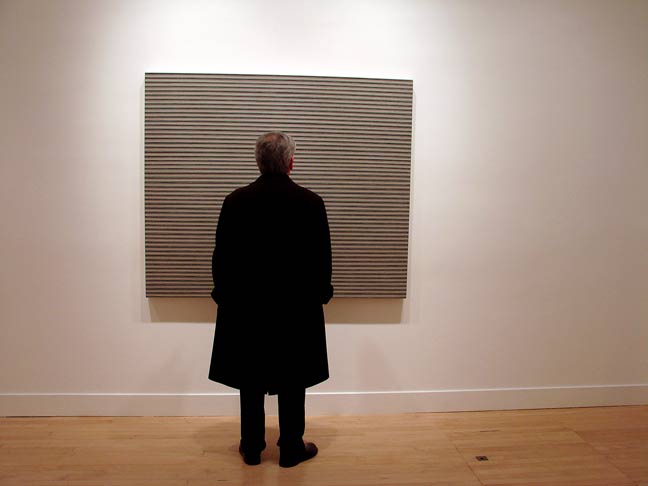
One of my favorite nonrepresentational abstract artists. Menswearish. Stripey. Delicious! You probably need to be there, since her work doesn't translate well to wee jpegs. I fell in love with her paintings in Buffalo, which houses several in their university-run art museum.


5. Livio de Marchi

Gorgeous, realistic wood carvings of all kinds of everyday items come out of Livio de Marchi's studio. Whether it's a trenchcoat hanging on the wall, a table with a permanently carved tablecloth, an array of wooden bras, or the hand-carved wooden ferrari boat he uses to get around Venice, I covet it all. He's another artist from Lieve Hemel on the Spiegelstraat, which I'm convinced is the best private gallery on earth.


Thursday, December 24, 2009

10 Books I Liked This Year

So I've read a bunch of "best of 2009" book lists, and their two biggest flaws are that, first of all, it's impossible to have read everything published in 2009 (especially by that November deadline when the story went to print!), and second, I've usually read at least one or two things on that list that was "meh" at best.

Here, then, are ten books I read last year (not that came out, though most of it is of a recent vintage) that I liked. They are almost certainly not an exhaustive best of anything list. Also, I'm still reading stuff now in these last seven days of December, and it's possible that eg Tatyana Tolstoy's diary will totally blow everything else away. One hundred fifty pages in, though, I'm doubting it. These are kind of in order but not really, since each has its own charm.

In most cases, my Goodreads reviews of these books are far more detailed and nuanced than the brief summaries here.


Gelly's Recommended Reading List for 2009

10. City of Thieves, David Benioff and This is Where I Leave You, Jonathan Tropper (tie!)

A tie is a copout, but 10 is a wildly arbitrary number and I couldn't decide between the two. Both are lighthearted and hilarious, making serious subject matter (the siege of Leningrad and Nazi horrors, shiva after the death of a family member) a thorough blast to read through. They're not going to win you any points with your pretentious Roth and Pynchon loving friends, but read them in secret if you have to: both are cinematic, fun, quick, and well-written despite not seeming terribly "deep." If you love both of these, check out Josh Bazell's Beat the Reaper which tells the strange tale of a man turned surgeon who joins the witness protection program after joining the mob to avenge his Auschwitz-survivor grandparents' death. All take the Jewish identity theme and run somewhere better with it than last year's Orange finalist, When We Were Bad.

9. The Engineer of Human Souls, Josef Skvorecky

This is an old Czech book, and like all Czech novels it's about a philandering dissident author trying to find meaning through beauty and art etc. Unlike most Czech novels, the protagonist has left for the greener pastures of teaching literature at a small Canadian college. He shares conspiracy theories with his expat friends about the Czech intelligence service watching him, attempts to implant a love for literature in a class of generally brain-dead students, and spends most of his time reminiscing about his Czech youth, which goes from carefree to vulnerable and tragic during the second world war.

There are so many layers of story here and jumps in time, but Skvorecky manages it seamlessly. It's a beautifully told story.

8. Fun Home: A Family Tragicomic, Alison Bechdel

I've read many graphic novels in the last year, but even Maus didn't affect me emotionally as much as the true story of Alison Bechdel's father, whose death the college-aged Alison grieves as she learns more about the secret double life he led. She conveys his love of literature and troubled relationship with his family sensitively and compellingly.

7. Into the Beautiful North, Luis Alberto Urrea

An amazing story of a road trip from Sinaloa to Illinois and back again, Into the Beautiful North follows protagonist Nayeli's attempt to recruit young men to come back to Mexico to live in her romantically-frustrated village. She takes her two best girlfriends and gay boss Tacho (ironically the only young man left in town) with her, hoping to find and bring back her emigrant father along the way. The novel manages to keep a light tone without shying from addressing poverty, border violence, and the exploitation of Mexicans immigrating to the US.

6. The Lost City of Z, David Grann

The Lost City of Z is the only nonfiction book I'm including here, and it definitely stood out from any potential competition. (2008 seems to have been my year of great nonfiction - Traffic, Fruit Hunters, and A Bottle of Rum were all lovely...2009 seems to have been all about the short story novel!) Grann sets out to understand and explain the disappearance of Amazon explorer Sir Percy Fawcett, while attempting to determine whether the famed lost civilization Fawcett disappeared trying to find really existed. The book's biggest flaw is that it stops, leaving the reader wanting to know much more about what happened to Fawcett. It is, however, a riveting retelling of an old mystery.

5. The White King, György Dragomán

One of those rare attempts at the short story as novel genre that gets it right, The White King follows Djata, a preteen boy growing up in a totalitarian Eastern European country that sounds an awful lot like Ceausescu's Romania, through various episodes of his schoolboy's life while in the background he struggles to find out what has happened to his father, who has been removed from the family home as a political prisoner. Dragomán successfully portrays the absurdity of a society where every aspect of life is tightly controlled by higher authorities; the stories reminded me simultaneously of both Viktor Pelevin and Lord of the Flies.

4. Wolf Hall, Hilary Mantel

This year's Booker winner can't be described without the word "ambitious," something the author and the protagonist Thomas Cromwell share in abundance. One of the most detailed historical novels I've read, Wolf Hall is fictionalized but kept carefully in line with the historical record; Mantel mostly fills in the gaps to create rich inner lives for all of her characters. There have been many stories told about the court of Henry VIII, but the riveting Wolf Hall reaches a depth that I haven't seen elsewhere.

3. Olive Kitteridge, Elizabeth Strout

Another big prize winner! I am rarely in strong agreement with the Pulitzer committee, but the titular Olive and her little Maine town are rendered so vividly that I can't imagine a more worthy winner (even though I was cheering for finalist Plague of Doves out of all the things I read last year). Olive is not all that likable as a protagonist. Picture me in about forty years: cranky, frumpy, and disappointed in the world, and you've pretty much got her. I've always found the more complex and less sympathetic characters the most interesting, though, and Strout's short story collection, woven together around the town's inhabitants with every other story featuring Olive, creates an admirably multidimensional narrator while exploring the unavoidable lonely indignities of growing old.

2. The Crow Road, Iain Banks

This is another oldie-but-goodie, although The Crow Road has only recently been published in the United States. Other than some unfamiliar Scottish vocabulary ("moroculous"), I can't imagine why. It's a complex and wonderful novel. We meet narrator Prentice McHoan at the funeral of his grandmother after he's spent the last few years of his life being a mostly decent-hearted but generally self-absorbed shiftless prat. In the course of the book he is thoroughly pummeled until he appears to have lost everything, and then he loses more. From these depths he manages to emerge as a somewhat decent person, solving an old family mystery yet realizing that some things are best left buried.

1. 2666, Roberto Bolaño

I had mixed feelings while reading 2666, its nine hundred pages was at times a bit of a slog, and all of the loose threads made it seem to somehow converge upon brilliance while leaving it a hair's width out of reach. It's hard not to wonder what its final form would have been had Bolaño lived to see its publication, and I became skeptical halfway through reading the novel when someone found an apparently previously missing extra section of the book! Still, I'm convinced the loose threads add something. And strangely, it is the kind of book that is still riveting even when an entire major section has apparently gone missing. After all, we're shown the futility of solving some of the mysteries when no one acts on them. The writing is so flowing, and there were a hundred little subplots in which I lost myself enjoying. It's the kind of novel that makes you want to start making charts and lists and taking out atlases and plotting out who was where when and what exactly happened, but border city Mexico is not portrayed as the kind of place where objective truth really matters. Instead we are infused with the flavor of a place.